Pocket Knife Openers Explained: Flippers, Thumb Studs, & More

In this Article
- Knife Opening Mechanisms & Openers
- Prominent Knife Opening Mechanisms
- How to Open Each Type of Pocket Knife
- FAQ
It’s undeniably satisfying to open and close a knife.
I do it so often, my family always knows I’m coming before they see me—they hear a click, click, click as I fidget with my pocket knife.
If you have a loved one who’s constantly fidgeting with their folder, maybe you’ve wondered, "Can I do that? Can I have that joy?"
The answer is, of course, yes. In this article, I’ll teach you how.
Knife Opening Mechanisms & Openers
There are two things to consider when opening a pocket knife: The knife’s opening mechanism and the knife’s opener.
Generally, the former is the mechanism built into the knife that facilitates the blade’s deployment, and the latter is the system you engage to activate that mechanism.
Consider the Kershaw Leek, for example: Its SpeedSafe assisted-opening system is the opening mechanism, while the thumb stud/flipper tab is the opener you use to engage that mechanism and deploy the blade.
Prominent Knife Opening Mechanisms
Manual Knives
For these knives, you are the opening mechanism.
Manual pocket knives often have a lock to keep the blade from closing on your fingers (to learn all about those, check out our article on lock types).
The benefit of manual pocket knives is that you’re in control of the entire process, and they’re great for fidgeting.
Assisted Opening Knives (Spring Assisted Knives)
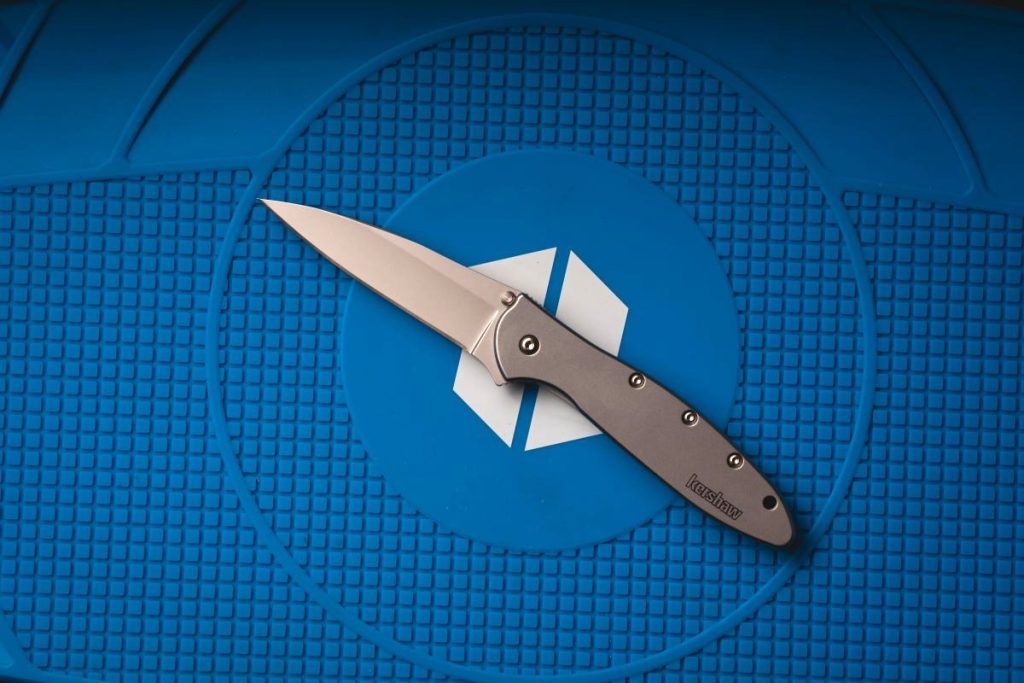
This mechanism varies mechanically between manufacturers, but each system serves the same purpose: to propel the blade into the open position.
Your role is to press a lever, thumb stud, or flipper tab to overcome a detent (a mechanical component that secures something until enough force is applied).
Once overcome, the spring (or other mechanism) "assists" the blade the rest of the way open.
It’s easy and fast to open these knives with one hand, but closing them requires fighting the spring or other system that propelled the blade, reducing the fidget factor for some users.
The Kershaw Leek (mentioned above) and the Gerber Highbrow are two good examples.
Automatic Knives (Switchblade Knives)
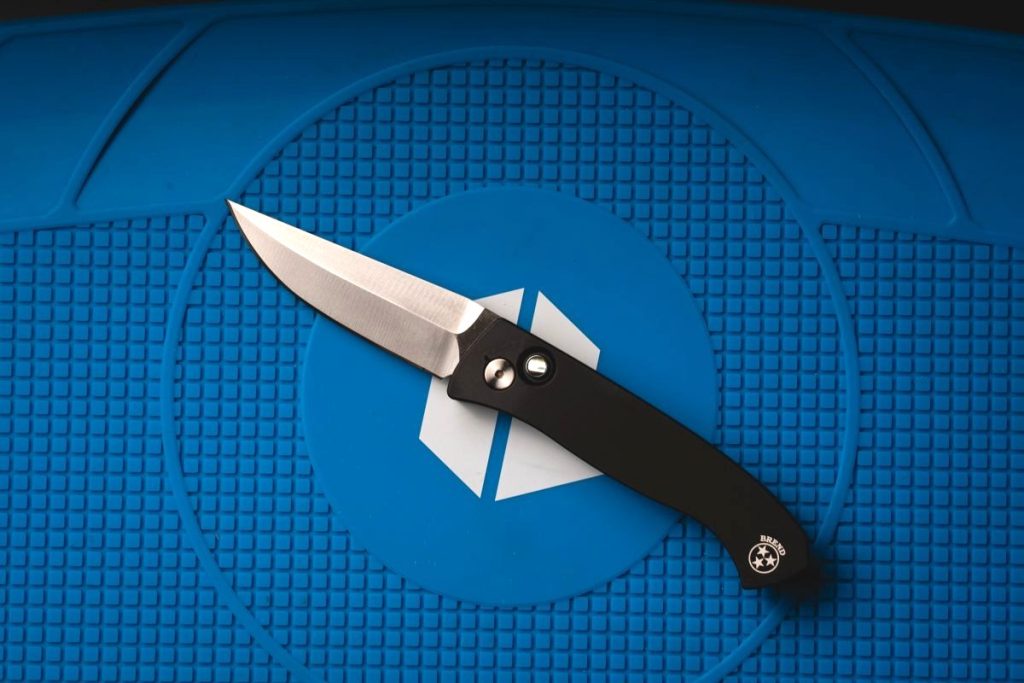
These cutters also use a spring but take the "assisted" out of the question.
With one push of a button (or lever for lever-action autos), the blade fires out and locks in place, ready to work.
It’s undeniably addictive, that press and subsequent snap, but the fidget cycle is interrupted in the same way that knives with a spring-assisted mechanism are: You have to fight the spring to shut the blade.
If you need a knife that you can get into action immediately, an auto is the way to go. We recommend all of Pro-Tech’s autos and anything from the Kershaw Launch series.
Double-Action OTF Knives
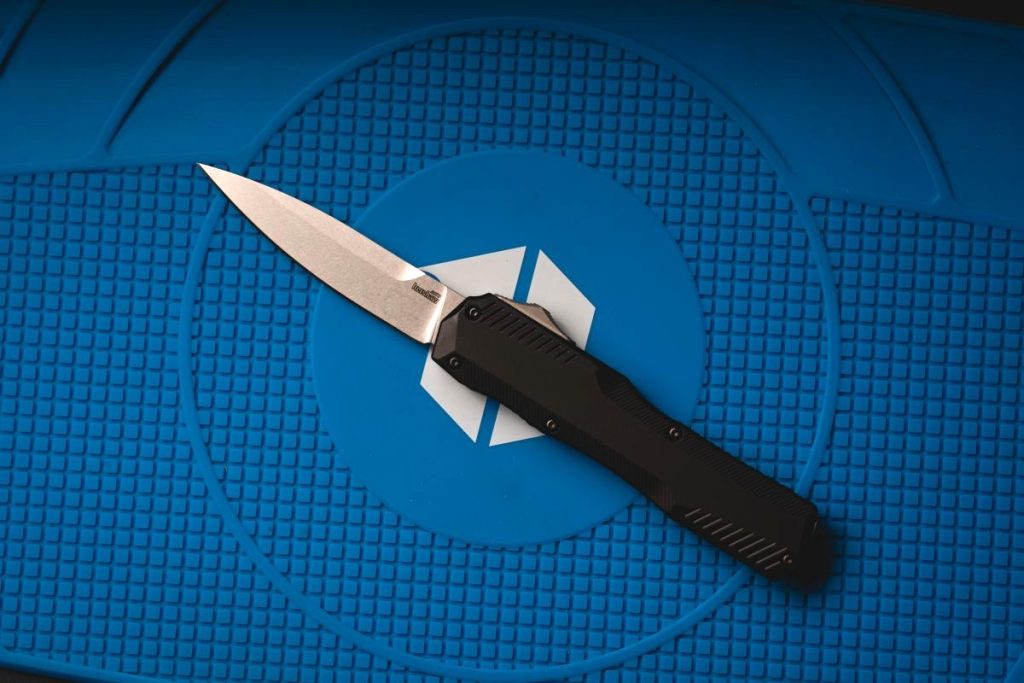
This type of switchblade knife has a long name. Let’s break it down.
- "Double Action" means the knife automatically opens and automatically closes.
- "OTF" stands for "Out The Front," indicating that the blade fires out through the top of the handle instead of swinging out the side.
- "Automatic," of course, means the blade will deploy when you press the button/move the switch.
The fidget factor on these knives is through the roof! With one hand, you can flick the blade between the open and closed positions repeatedly and rapidly.
The Microtech Ultratech and Guardian Tactical RECON-035 are examples of this mechanism done masterfully.
Dual-Action Knives
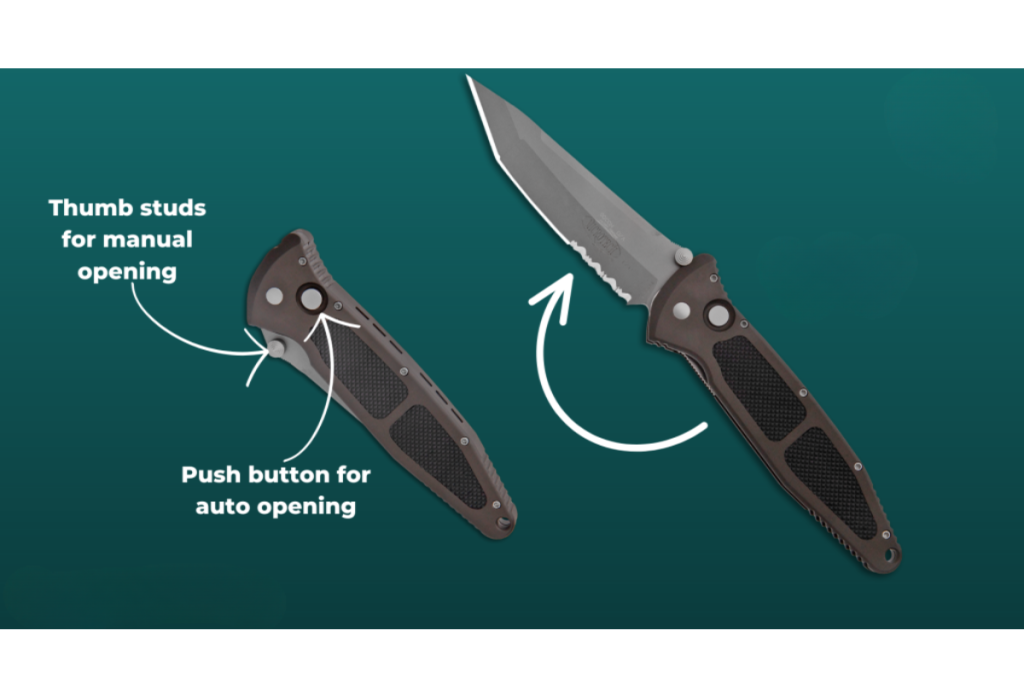
A dual-action knife and a double-action knife are not the same.
Generally, the former has two unique opening mechanisms bundled into one knife. The latter refers to knives with a blade that you can automatically deploy and retract (as seen above).
Your typical dual-action pocket knife will feature a manual mechanism with a flipper or thumb stud opener and an automatic mechanism with a button or hidden-release opener.
Dual-action knives are rare—they’re most often produced by custom knife makers.
How to Open Each Type of Pocket Knife
Nail Nick Opener
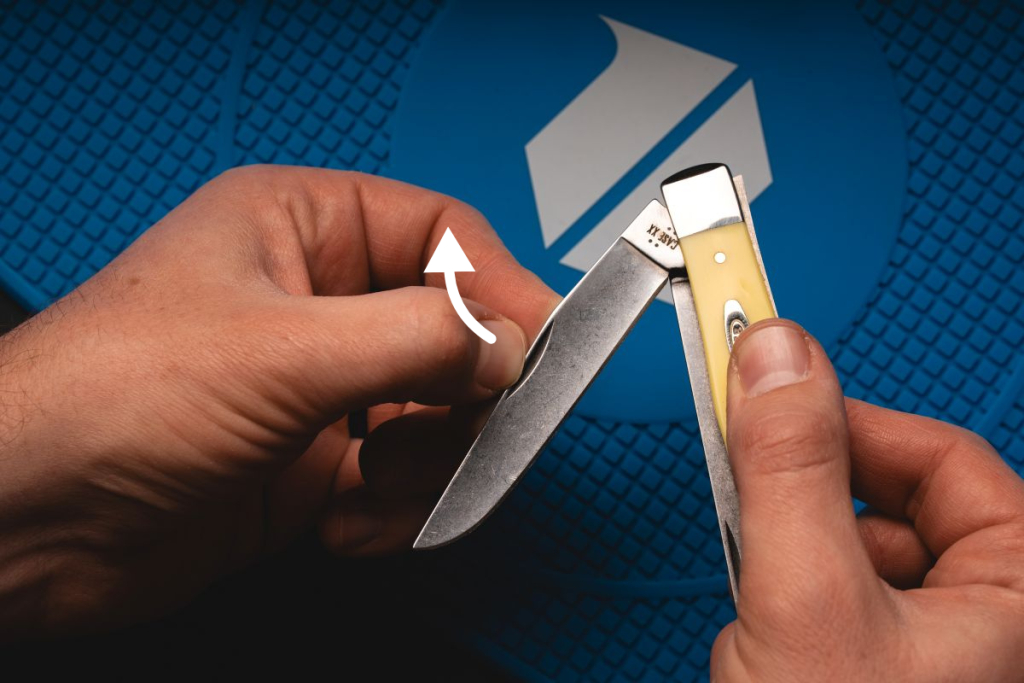
When it comes to pocket knives, there’s nothing more classic than the nail nick opener.
Most common on traditional pocket knives, this opener appears as a shallow slit in the knife’s blade. It’s typically paired with a lockback or slip joint system.
Nail nicks are simple, straightforward, and recognizable, but require two hands and can sometimes damage your fingernail.
How to Use a Nail Nick Opener
- Hold the knife in your dominant hand, keeping your fingers clear of the blade’s opening path.
- With your other hand, insert your thumbnail into the nail nick and pull the blade free.
(Tip: Sometimes you can pinch the blade and pull the knife open, allowing you to avoid hurting your thumbnail.)
Thumb Stud (Thumb Lug), Thumb Hole, Thumb Disk, and Thumb Groove Openers
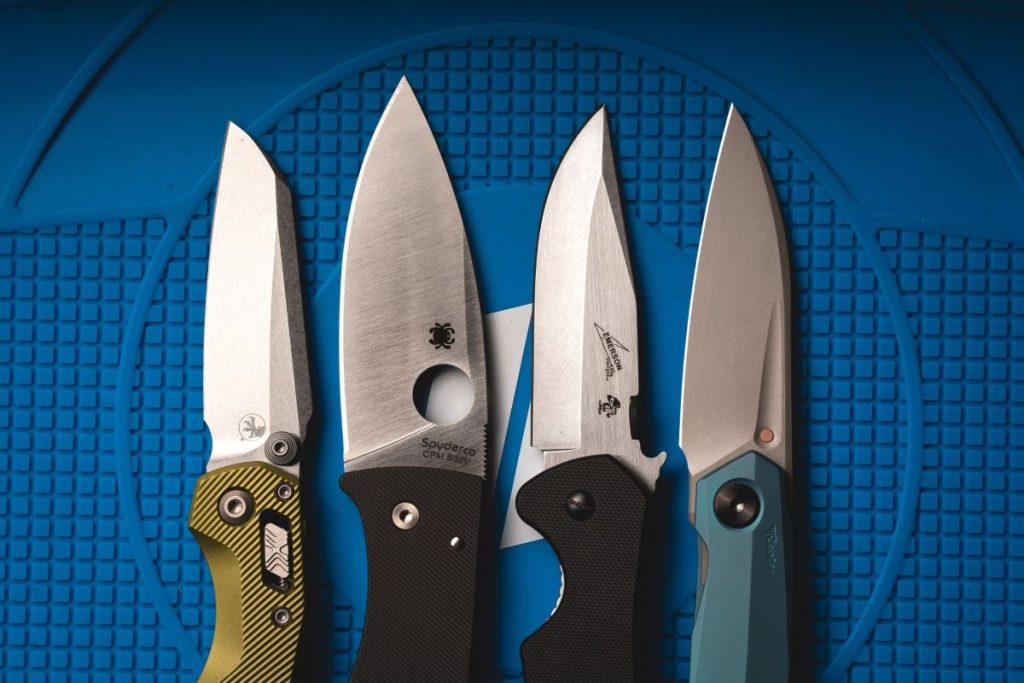
These four opener types function almost identically, allowing you to use your thumb to walk the blade open.
Here’s a breakdown:
- Thumb stud: a small knob attached to the blade
- Thumb hole: a hole through the blade
- Thumb disk: a separate little disk attached perpendicularly to the blade spine
- Thumb groove: a milled-out channel along the blade (essentially a fuller)
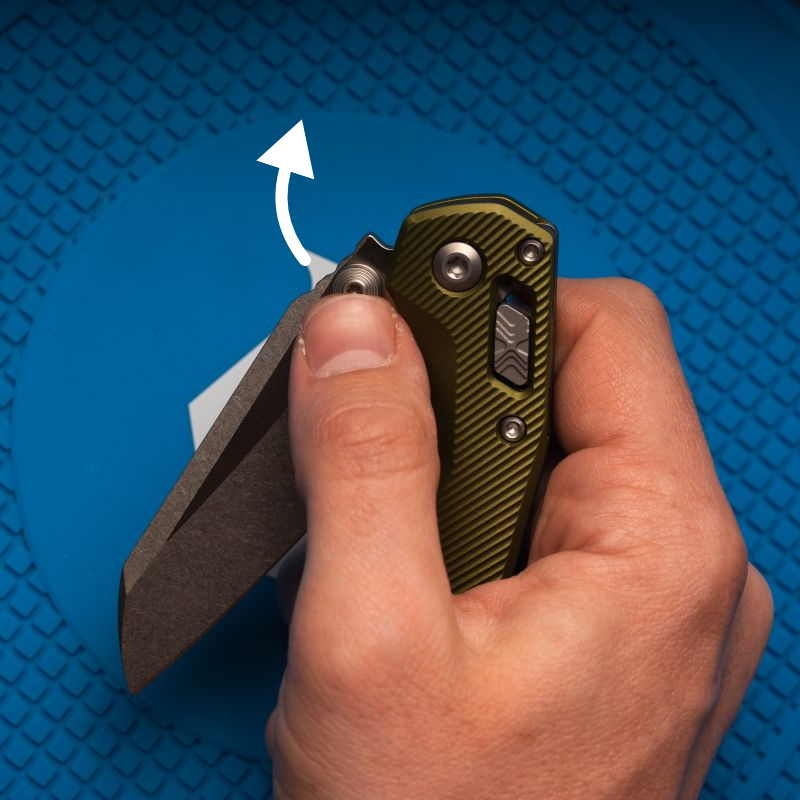
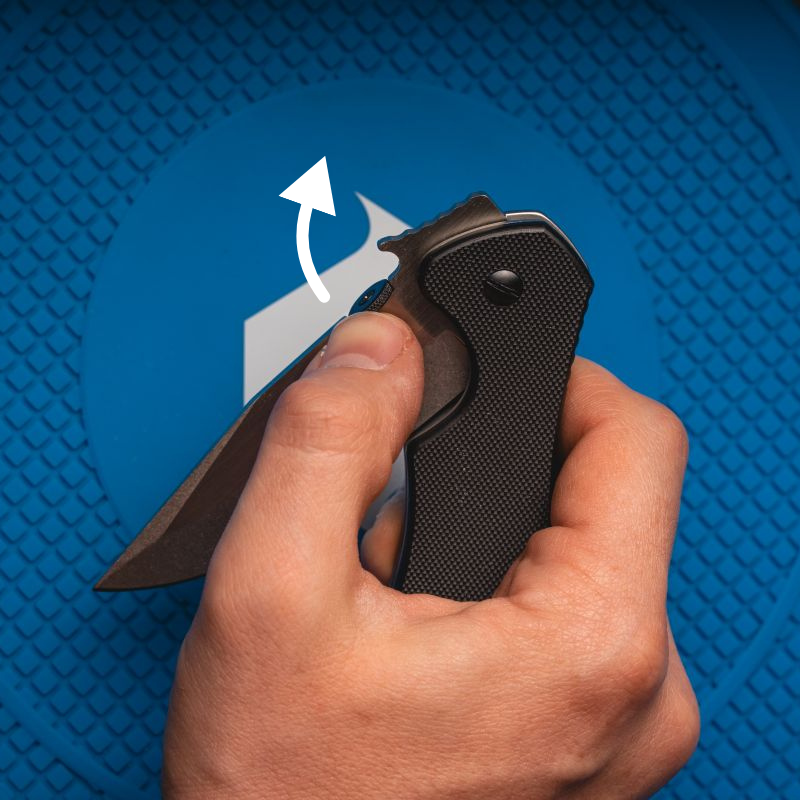
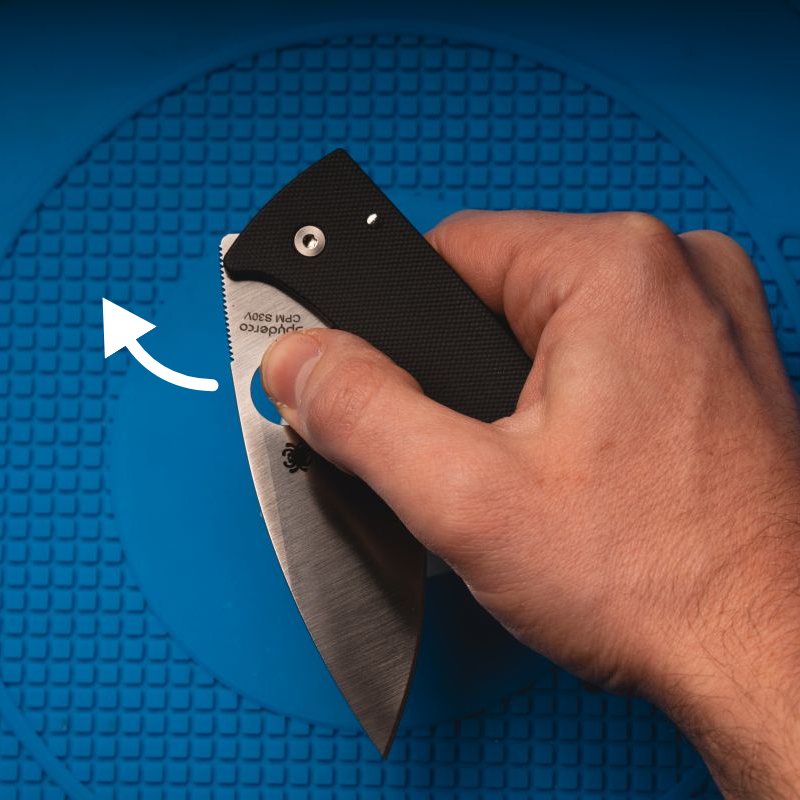
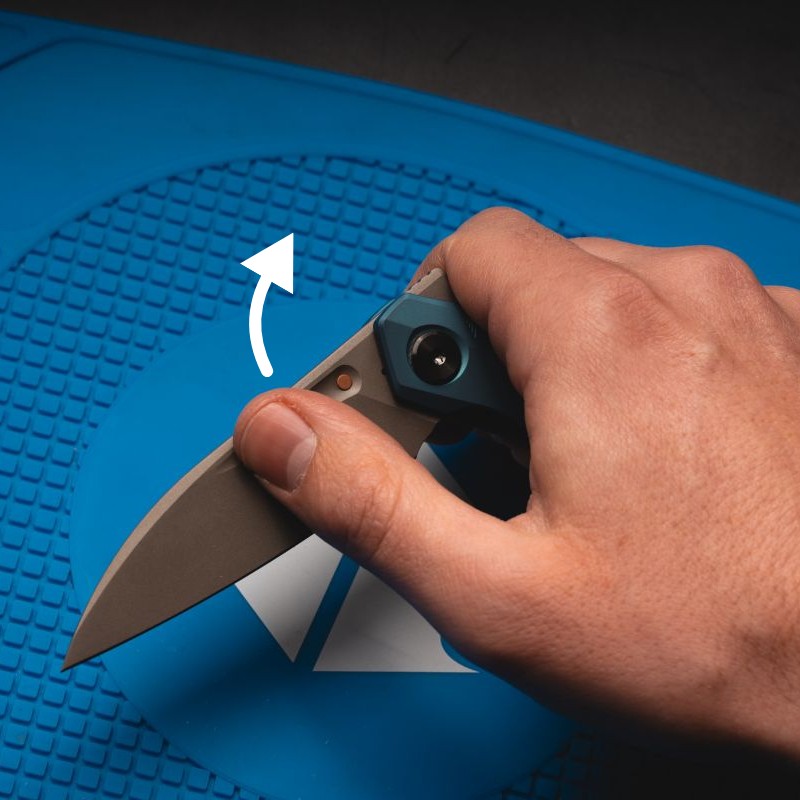
Each is positioned within reach of your thumb. These provide one-handed opening and great fidgeting, but some users find them difficult to master.
With practice, on most knives with these openers, you can flick your thumb to open the blade in a flash!
How to Use a Thumb Stud (Hole/Disk/Groove) Opener
- Hold the knife in your dominant hand, keeping your fingers clear of the blade’s opening path.
(Tip: If the knife has a frame lock, putting pressure on it will make opening your knife harder because it makes the detent more difficult to overcome. Try resting your fingers on the pocket clip instead.)
- Press your thumb under the thumb stud/disk (or under the top edge of the thumb hole/groove) and push out at 45°. When you overcome the detent, the blade will pop out, and you can walk it into the open position with your thumb.
What is "Spydie Flicking?"
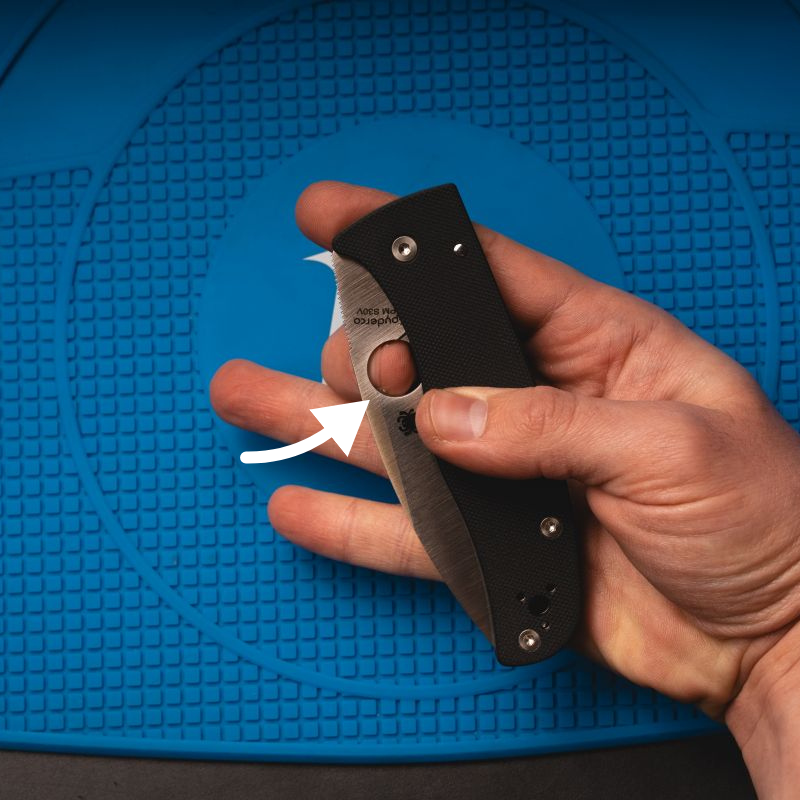
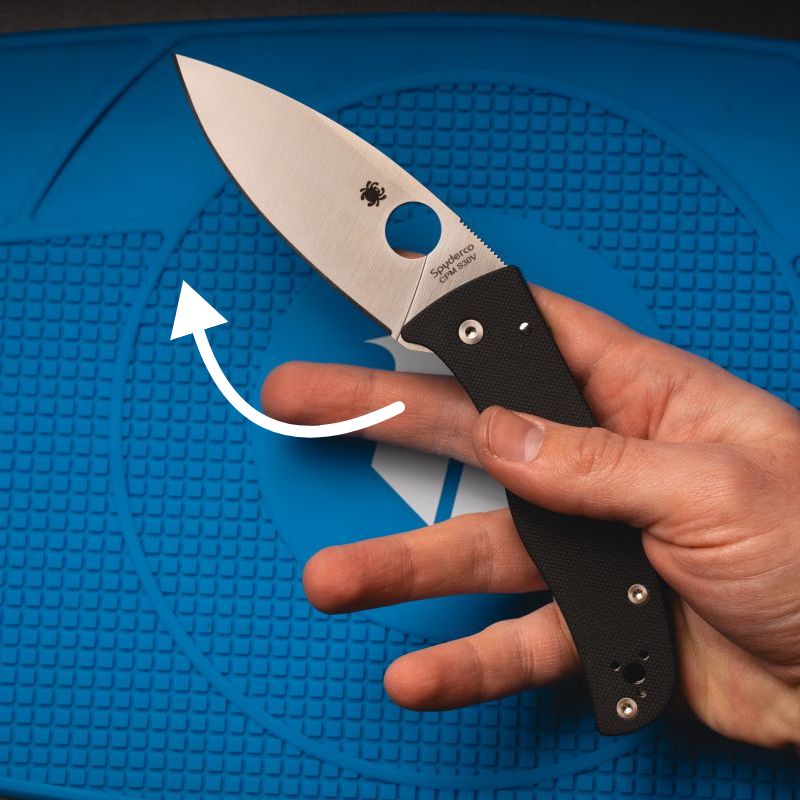
Spyderco popularized thumb holes with their iconic Round Hole opener. Fans of Spyderco knives devised a way to flick open many of their models using their middle finger, and dubbed it the "Spydie flick" (you can also call it a "reverse flick").
Though it’s easiest with a thumb hole, you can Spydie flick most knives with the above openers.
Flicking your knife open can be tricky, making it a fun challenge to overcome. Try using different grips and opening the blade with different fingers if you get bored with the most popular method.
How to "Spydie Flick" (Reverse Flick) a Pocket Knife
- In your dominant hand, anchor your knife’s handle in the base of your palm and pinch it between your extended thumb and forefinger. Extend your ring and little fingers out of the path of the blade.
(Tip: Getting the grip just right is challenging. Some users find it easier to grip the pocket clip with their ring and little fingers instead of extending them away. Experiment and find the grip that works best for you.)
- Rest the nail of your middle finger under the top edge of the thumb hole/groove (or the pad of your middle finger under the thumb stud/disk) and flick the blade out.
(Tip: If the blade isn’t opening all the way, try flicking your wrist while you flick your finger.)
Flipper Opener
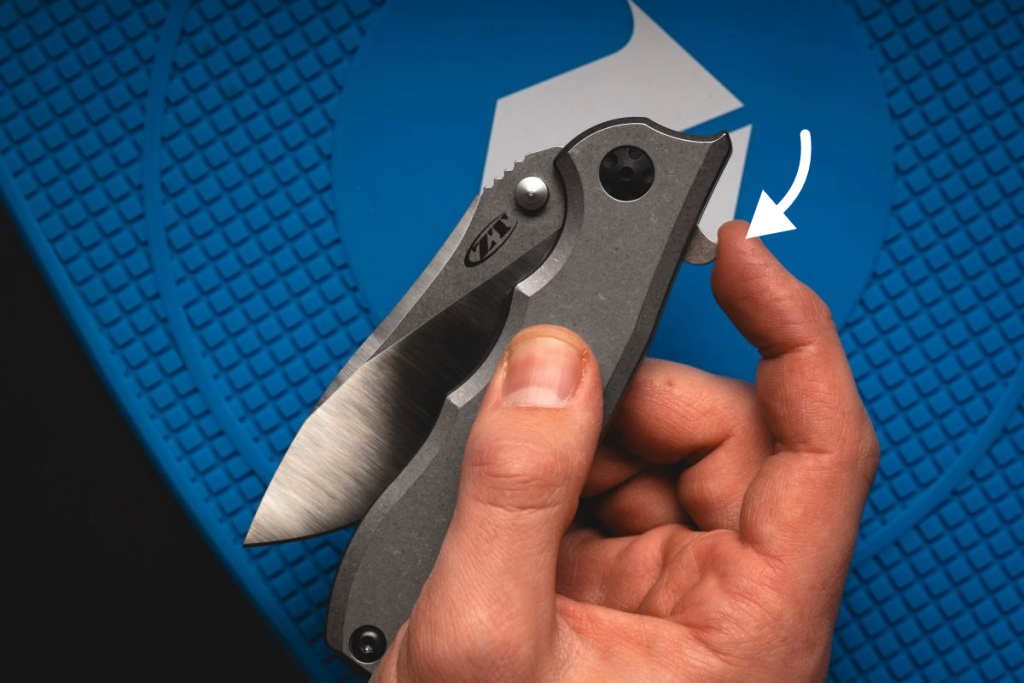
A flipper tab is a small protrusion on the base of the blade that extends from the back of the knife when it’s closed.
We have the CRKT Carson M16 to thank for popularizing the flipper tab. It’s considered one of the best opening methods: it’s fast, reliable, ambidextrous, and easy to use.
If a flipper knife has a ball-bearing pivot—or just a smooth pivot—you’re in for hours of quality fidgeting.
And you can rest assured knowing you can get your knife open with one hand at a moment’s notice.
How to Use a Flipper Tab Opener
- Hold the knife in your dominant hand, keeping your fingers clear of the blade’s opening path.
(Tip: If the knife has a frame lock, putting pressure on it will make opening your knife harder because it makes the detent more difficult to overcome. Try resting your fingers on the pocket clip instead.)
- Place your index finger on the top of the flipper tab and slide your finger down the handle’s spine. The blade will resist at first, then pop open.
(Tip: If you’re having trouble getting the blade to open all the way, try flicking your wrist.)
Front Flipper Opener
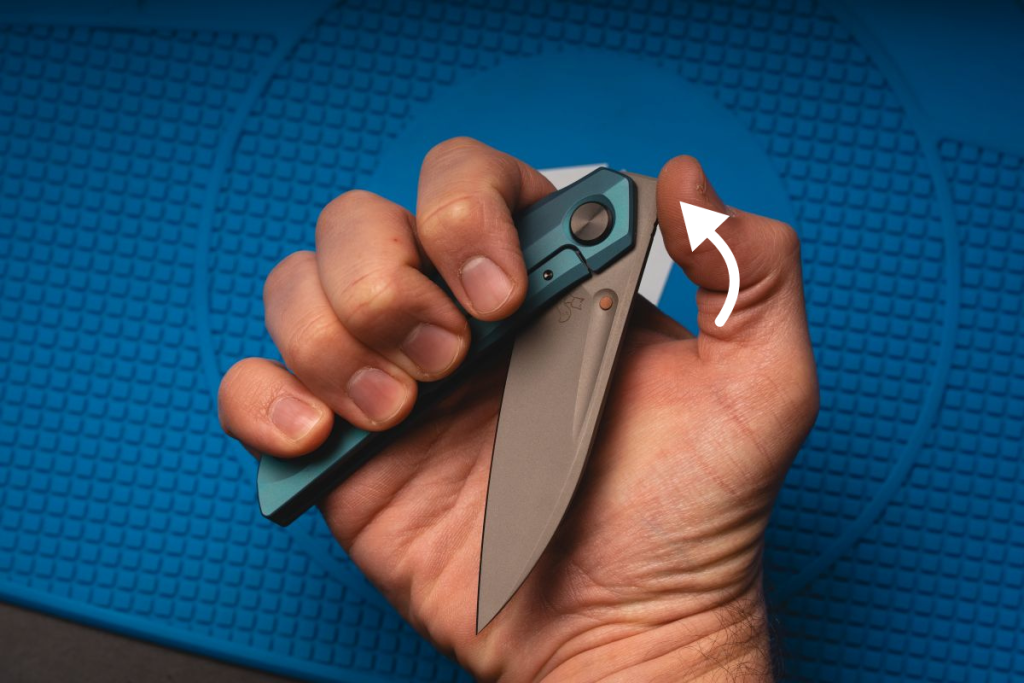
While a regular flipper tab extends from the back of the knife, a front flipper is…well, at the front.
Due to the different tab position, opening a front flipper knife is a wholly unique experience.
Using a front flipper can be a challenge, requiring intuitive finger placement and an unusual grip.
But don’t let that steer you away! With some practice, it’s one of the most satisfying and rewarding blade openers.
How to Use a Front Flipper
- Hold the knife only with your fingers, keeping your thumb free, with the blade spine toward you.
(Tip: Use the pocket clip to get a good grip.)
- Place the pad or side of your thumb against the front flipper and flick it back.
(Tip: Grip the knife a little lower to ensure the front flipper doesn’t get stopped on your finger.)
Push-Button Opener
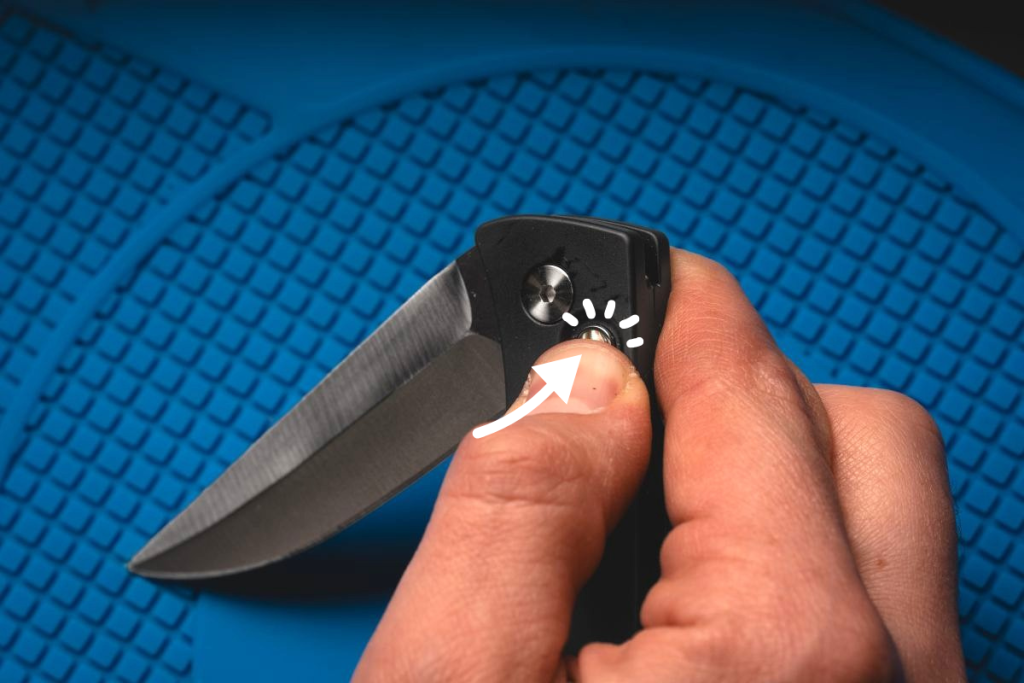
Out-the-side automatic knives, designed to reliably open in even the most trying circumstances, almost exclusively run a push-button opener.
But there are also many knives with button locks that don’t use the button as a blade deployment method. You’ll also find these non-opener buttons coupled with flipper tabs and thumb studs on many manual knives.
For these knives, the button serves only as a lock (though many users find pushing the button and flicking their wrist an effective and entertaining way to open their button-lock knives).
That’s not what we’re talking about. We’re talking about push-button knives where (you guessed it) pushing the button opens the knife automatically.
How to Use a Push-Button Opener
- Tightly hold the knife in your dominant hand, keeping your fingers clear of the blade’s opening path.
(Tip: Spring-loaded knives often open with authority—maintain a firm grip so it doesn’t jerk out of your hand!)
- Push the button with your thumb, releasing the blade.
(Tip: For left-handed users, you can press the button with your index finger. Some knifemakers also make left-handed versions of their knives.)
Thumb Slide Opener
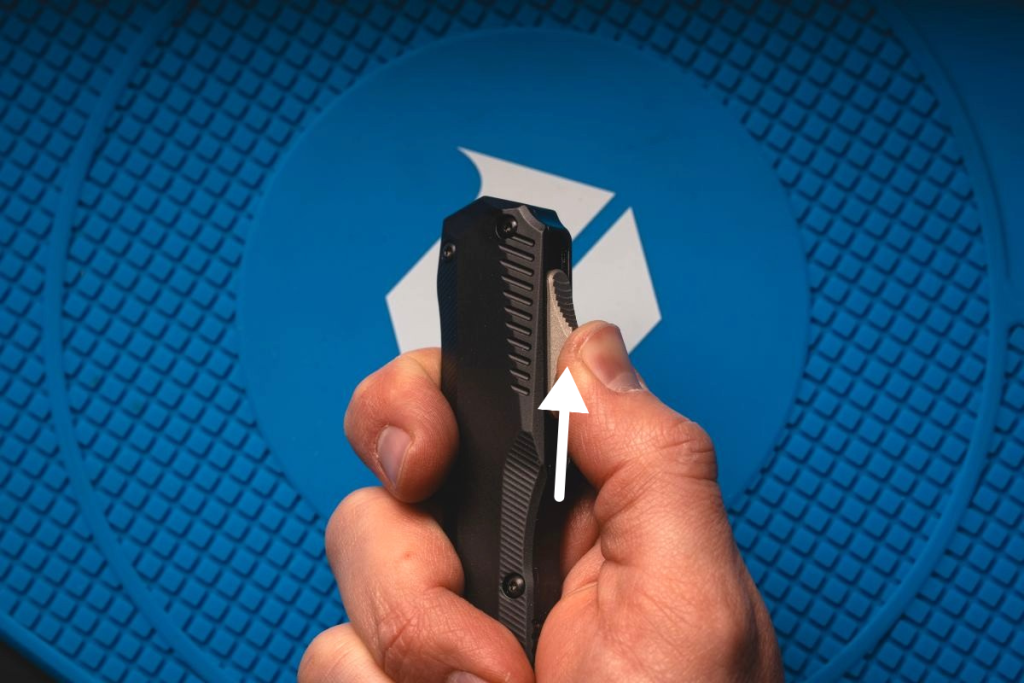
Thumb slides are found on double-action OTF automatic knives, providing the one-handed, powerful opening of button lock automatic knives without the difficulty of closing that kind of knife.
While OTF knives introduce problems of their own, like blade play and the possibility of coming off track (which you can read about in our OTFs article), opening and closing the knife is straightforward
And, well, straight-backward.
How to Use a Thumb Slide Opener
- Hold the knife in your dominant hand, keeping your fingers clear of the blade’s firing path.
(Tip: Firing the knife into anything remotely firm will cause the blade to come "off track," where it moves freely in and out. To get the knife back on track, pinch the blade’s flat and extend it fully until you hear the click of it locking open.)
- Push the slide to the top position with your thumb, firing the blade.
- To close the knife, pull the slide back down, retracting the blade into the handle.
Emerson Wave Opener
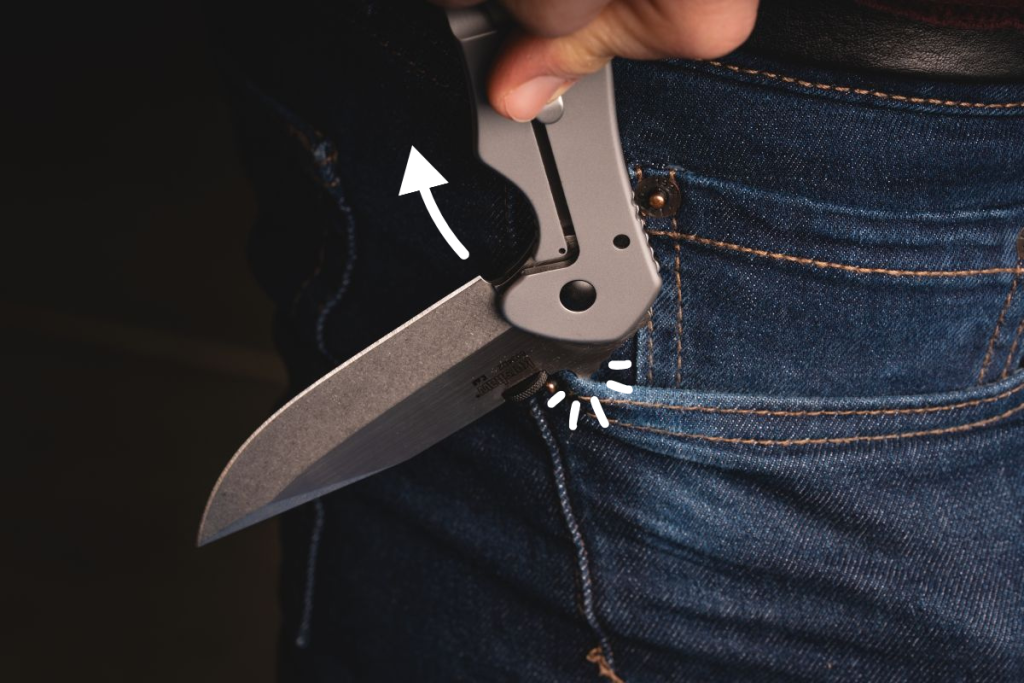
The Emerson Wave opener was designed to open your folding knife as you draw it from your pocket.
It’s often coupled with other openers, like the thumb hole in the LionSteel L.E.One.
By itself, it looks like a miniature crashing wave on the spine of your knife. It adds tons of points to the knife’s wow factor and to its tactical application, but does little for fidgetability.
The Wave opener is arguably the fastest way to get a folding knife into action, but your options are limited due to Emerson’s patent on the technology.
If you’re interested, consider any knife from the Kershaw Emerson series. You could also look at the DPx Gear HEST, which doesn’t have a true Wave opener, but its bottle opener can work like one.
How to Use a Wave Opener
- Grab your knife in your pocket with your fingers on the pocket clip. Make sure none of your fingers are in the opening path of the blade.
- Draw your knife, pressing the blade’s spine against the inside of your pocket. The Wave will catch your pocket and pull the blade into the open position.
Hidden Release Opener
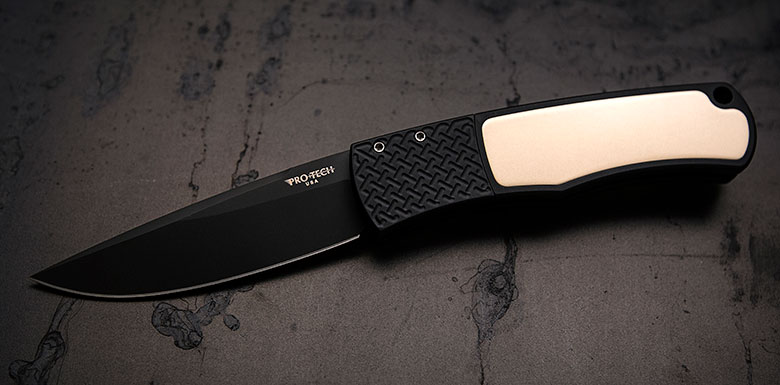
There’s no standard for hidden-release knives—and the mystery is part of the appeal!
Typically, these are automatic knives with a disguised opener that, when pushed or pulled, lets the blade spring open (the Pro-Tech Magic BR-1 is a perfect example).
Each opener is unique to the knife, so I can’t give you a step-by-step how-to. But if you adhere to the principles in the above guides, you’re sure to find the best way to open your hidden release knife in no time!
Butterfly Knives
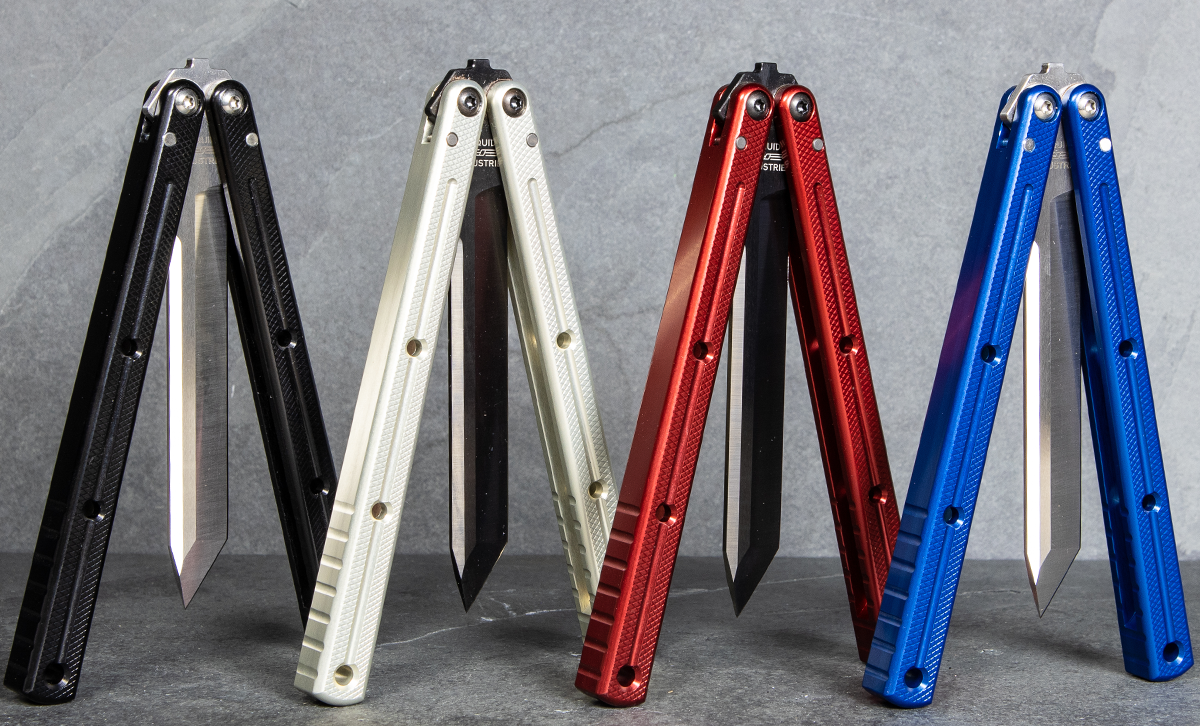
Opening and closing butterfly knives (or balisongs) is an art (check out this 2026 Bali Comp video if you need convincing). You can perform countless neat tricks to deploy and stow the blade if you’re willing to risk getting your fingers bitten.
Flipping balisongs is a surefire way to impress anyone watching, and is more for that purpose than anything practical; though, I’d be remiss not to mention that balisongs are great one-handed cutters once you get the hang of swinging one around.
We won’t teach you how to flip a balisong here—there’s a lot more on that topic than we can fit in this article.
(Honestly, if you want to learn how to flip, you’re better off watching a few tutorial videos than reading an article.)
Knife Opener Comparison Table
| One Hand Use | Beginner Friendly | Fidget Factor | |
| Nail Nick | No | 10/10 | 2/10 |
| Thumb Stud/Hole | Yes | 6/10 | 9/10 |
| Flipper Tab | Yes | 9/10 | 8/10 |
| Thumb Slide | Yes | 8/10 | 8/10 |
| Push-Button | Yes | 7/10 | 6/10 |
| Hidden Release | N/A | 4/10 | 9/10 |
| Butterfly | Yes | 2/10 | 10/10 |
| Wave Opener | Yes | 8/10 | 7/10 |
Now You Know How to Open Most Pocket Knives!
Opening pocket knives will become second nature with practice. Every knife opening mechanism and opener will be a playground for your fingers.
But these are sharp tools we’re dealing with. It’s important to remember safety: Never open or use knives irresponsibly or in inappropriate places.
Spring-assisted knives, switchblades, and balisongs can be especially dangerous. Always maintain a firm grip on the knife and ensure nothing is in the blade’s opening path.
Check out this article for more switchblade safety tips.
Now, whatever knife comes your way, you’ll be ready to open it. You’re prepared to taste the endless entertainment that is fidgeting with a pocket knife.
Maybe your loved ones, like mine, will say, "Here comes [your name here]!" as you approach, knife in hand, sounding off a series of satisfying clicks.
FAQ
What is the easiest pocket knife opener to use?
The flipper tab. A flipper tab is easy to use and understand. One flick of your finger, and your knife is open.
What is the fastest pocket knife opener?
The Wave opener. Most knives require you to remove the knife from your pocket before you can open them, but the Wave opener deploys the blade as the knife leaves your pocket.
Are thumb studs better than flippers?
It’s a matter of preference. Both are excellent and have pros and cons. Flippers are easier to use, but thumb studs are arguably more satisfying once mastered.
What opener is best for beginners?
Flipper or nail nick. Flipper tabs are easy and intuitive to use. And you can’t go wrong with the classic nail nick.


 Copyright © 2026 Blade HQ. All rights reserved